
Viewing 1 - 6 out of 6
Patient Education

Refractive Surgery
Corneal Inlays for Presbyopia
Presbyopia is an age-related eye condition, which gradually weakens the eye’s ability to focus at near, making reading and other near-focused tasks difficult. Common treatments for presbyopia include eyeglasses, contact lenses or laser vision corrective surgery. A newer way to treat presbyopia is with

Refractive Surgery
Laser Eye Surgery
A laser is an intense beam of light. In surgery, one type of laser can be used to create heat energy, and another can be used to cut or sculpt. Ophthalmologists often use lasers in surgery to treat certain eye problems, including glaucoma, diabetic retinopathy, macular degeneration, refractive errors,

Refractive Surgery
LASIK
LASIK is a type of refractive surgery. With this outpatient procedure, a laser is used to reshape your cornea, improving how light rays are focused in the eye. LASIK is used to treat myopia (nearsightedness), hyperopia (farsightedness) and astigmatism. It cannot correct presbyopia, the normal loss of

Refractive Surgery
PRK (Photorefractive Keratectomy)
PRK is a type of refractive surgery. With this outpatient procedure, a laser is used to reshape your cornea, improving how light rays are focused in the eye. PRK is used to treat myopia (nearsightedness), hyperopia (farsightedness) and astigmatism. It cannot correct presbyopia, the normal loss of close-up

Refractive Surgery
Small Incision Lenticule Extraction (SMILE)
Small incision lenticule extraction (SMILE) is a newer type of refractive surgery. With this outpatient procedure, a laser is used to create a disc of corneal tissue. The disc is removed to reshape your cornea and improve how light rays are focused in the eye. SMILE is FDA-approved to treat mild nearsightedness
Refractive Surgery
Wavefront-Guided LASIK
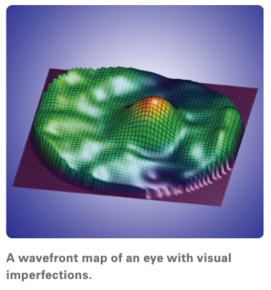
Wavefront-guided LASIK (or custom LASIK) is a type of refractive surgery. With this outpatient procedure, a laser is used to reshape your cornea, improving how light rays are focused in the eye. A device called a wavefront scanner creates a very detailed map of the cornea. This map is programmed into

Contact Us Today
Please do not submit any Protected Health Information (PHI).
Monday
8:00 am am - 5:00 am pm
Tuesday
8:00 am am - 5:00 am pm
Wednesday
8:00 am am - 5:00 am pm
Thursday
8:00 am am - 5:00 am pm
Friday
8:00 am am - 5:00 am pm
Saturday
Closed
Sunday
Closed
Office Hours
Monday
8:00 am am - 5:00 am pm
Tuesday
8:00 am am - 5:00 am pm
8:00 am am - 5:00 am pm
Wednesday
Thuirsday
8:00 am am - 5:00 am pm
8:00 am am - 5:00 am pm
Friday
Closed
Saturday
Closed
Sunday
(954) 488-2020