
Viewing 13 - 17 out of 17
Patient Education

Glaucoma
Pigment Dispersion Syndrome
Pigment dispersion syndrome (PDS) happens when the pigment rubs off the back of your iris. This extra pigment floats around in other parts of the eye, besides the iris, where it is supposed to be. This can cause eye pressure problems and lead to pigmentary glaucoma. If you have PDS, you should see your

Glaucoma
Prostaglandin Analogs for Glaucoma
Your ophthalmologist has recommended you use a type of medicine called a prostaglandin analog. This kind of medicine is helpful in treating glaucoma. Glaucoma is a disease that affects your eye’s optic nerve, possibly leading to blindness. The optic nerve connects your eye to your brain so you can

Glaucoma
Pseudoexfoliation Syndrome (PXF)
Pseudoexfoliation syndrome (PXF) is when small clumps of protein fibers peel off from the lens inside your eye. This material floats throughout the entire body, but it is only known to cause problems if it builds up in the eye. This can lead to glaucoma and loss of vision. If you have PXF, you need to
Glaucoma
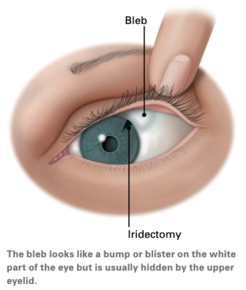
Trabeculectomy
Trabeculectomy is a type of surgery to treat glaucoma. With glaucoma, fluid does not drain properly from the front of the eye. Pressure builds in the eye, which damages the optic nerve. Trabeculectomy creates a new way for aqueous humor to drain from the eye. This helps reduce eye pressure. If you have

Glaucoma
Visual Field Test
A visual field test measures how much you can see around you. Ophthalmologists often use this test to diagnose and monitor eye problems. To take the test, you sit at a device called a perimeter with one eye covered. When you see a light appear on a screen, you simply press a button. The test is repeated

Contact Us Today
Please do not submit any Protected Health Information (PHI).
Monday
8:00 am am - 5:00 am pm
Tuesday
8:00 am am - 5:00 am pm
Wednesday
8:00 am am - 5:00 am pm
Thursday
8:00 am am - 5:00 am pm
Friday
8:00 am am - 5:00 am pm
Saturday
Closed
Sunday
Closed
Office Hours
Monday
8:00 am am - 5:00 am pm
Tuesday
8:00 am am - 5:00 am pm
8:00 am am - 5:00 am pm
Wednesday
Thuirsday
8:00 am am - 5:00 am pm
8:00 am am - 5:00 am pm
Friday
Closed
Saturday
Closed
Sunday
(954) 488-2020