
Viewing 19 - 24 out of 29
Patient Education

Cornea and External Disease
Herpes Keratitis
Herpes keratitis is a viral infection of the eye caused by the herpes simplex virus (HSV). The infection can be transferred to the eye by touching an active lesion (a cold sore or blister) and then your eye. Almost everyone is exposed to the HSV during childhood. After the original infection, it lies

Cornea and External Disease
Herpes Simplex
Herpes simplex is a virus that can infect your skin, nerves and tissue. If it infects your eyes, they become red, sore and sensitive to light. Vision can become blurry. The herpes virus cannot be cured, but herpes simplex eye symptoms must be treated right away. You may be prescribed antiviral eye drops

Cornea and External Disease
Marfan Syndrome
Marfan syndrome is a genetic condition that affects the body’s connective tissue. Marfan syndrome can affect many different parts of the body. Eye problems are common in people with Marfan syndrome. Most people with Marfan syndrome have myopia (nearsightedness) and astigmatism. More than half of people
Cornea and External Disease
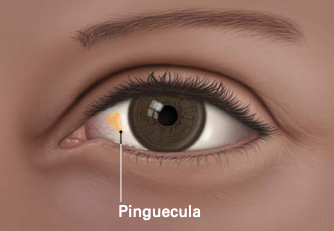
Pinguecula Pterygium
Pinguecula and pterygium are growths on the conjunctiva of your eye. Pinguecula is a yellow spot or bump on the conjunctiva, often on the side of the eye near your nose. A pterygium is a fleshy growth that may start as a pinguecula. It can grow large enough to cover part of the cornea. Both are believed

Cornea and External Disease
Pterygium Treatment
A pterygium (pronounced “ter IDJ ee um”) is a wedge-shaped bump of fleshy tissue that grows on the white of the eye. It may begin to grow toward the center of the eye, over the cornea. This common eye condition is also known as “surfer’s eye” or “farmer’s eye.” This is because pterygia
Cornea and External Disease
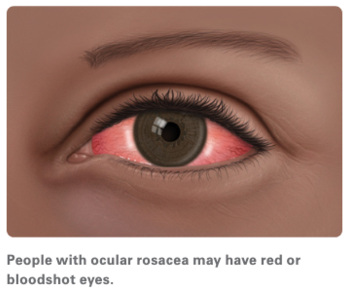
Rosacea
Rosacea is an ongoing (chronic) skin disease that causes your face to flush red. If your eyes are affected, they can be red and watery, and feel irritated and painful. Treating the eye symptoms of rosacea may include using steroid eye drops and ointments to reduce redness and swelling. Antibiotics might

Contact Us Today
Please do not submit any Protected Health Information (PHI).
Monday
8:00 am am - 5:00 am pm
Tuesday
8:00 am am - 5:00 am pm
Wednesday
8:00 am am - 5:00 am pm
Thursday
8:00 am am - 5:00 am pm
Friday
8:00 am am - 5:00 am pm
Saturday
Closed
Sunday
Closed
Office Hours
Monday
8:00 am am - 5:00 am pm
Tuesday
8:00 am am - 5:00 am pm
8:00 am am - 5:00 am pm
Wednesday
Thuirsday
8:00 am am - 5:00 am pm
8:00 am am - 5:00 am pm
Friday
Closed
Saturday
Closed
Sunday
(954) 488-2020